
If you're planning a Sri Lanka trip, the same handful of practical questions come up again and again in every backpacker group: how to handle money, where to book beds, which SIM to buy, and how on earth the buses and trains connect. Here are honest, up-to-date answers — the kind of thing we tell our own travellers before they fly.
Quick answers
- Money: a Wise or Revolut card for ATM withdrawals and card payments, plus rupee cash for everything small. You can't buy rupees before you arrive.
- Accommodation: Booking.com for reliability, cross-check Agoda for price, WhatsApp small guesthouses directly for the best rate.
- SIM: a Dialog or Mobitel tourist SIM at the airport — tens of GB for a few dollars.
- Transport: trains for scenic legs (book ahead), buses for cheap short hops (no timetable — just turn up), a driver or shared taxi for the slow legs.
Revolut, Wise, or cash — what's best for money in Sri Lanka?
Use a combination, with a Wise or Revolut card doing most of the work and rupee cash for everything small. Here's why that beats picking just one.
First, an important thing nobody tells you: the Sri Lankan rupee (LKR) is a restricted currency, so you can't buy it before you fly. You get your rupees once you land.
- Wise and Revolut both give you close to the real interbank exchange rate on card payments and ATM withdrawals — noticeably better than exchanging cash at a counter. Either one is great; there's no meaningful winner between them for Sri Lanka. Bring one as your main card (and ideally a second card as backup).
- The catch is the local ATM fee. Most Sri Lankan bank ATMs add their own per-withdrawal charge regardless of which card you use. The fix is simple: withdraw larger amounts less often rather than small sums repeatedly, and choose ATMs attached to major banks inside towns.
- Cash (EUR/USD) as backup. Bring a modest amount of euros or dollars for emergencies and exchange it at a bank counter — the ones in the airport arrivals hall are fine and give fair rates. Avoid changing money at hotels, where rates are poor.
Sri Lanka runs on cash more than most first-timers expect. Cards are fine at bigger hotels and city restaurants, but drivers, tuk-tuks, roadside food, temple and park entry fees, and most small guesthouses are cash only. Always keep a stash of smaller rupee notes — breaking a large note at a village stall is a hassle.
If you want the fuller picture on daily budgeting, our Sri Lanka travel essentials guide covers what a trip actually costs and where the money goes.
Booking.com, Agoda, or find accommodation locally?
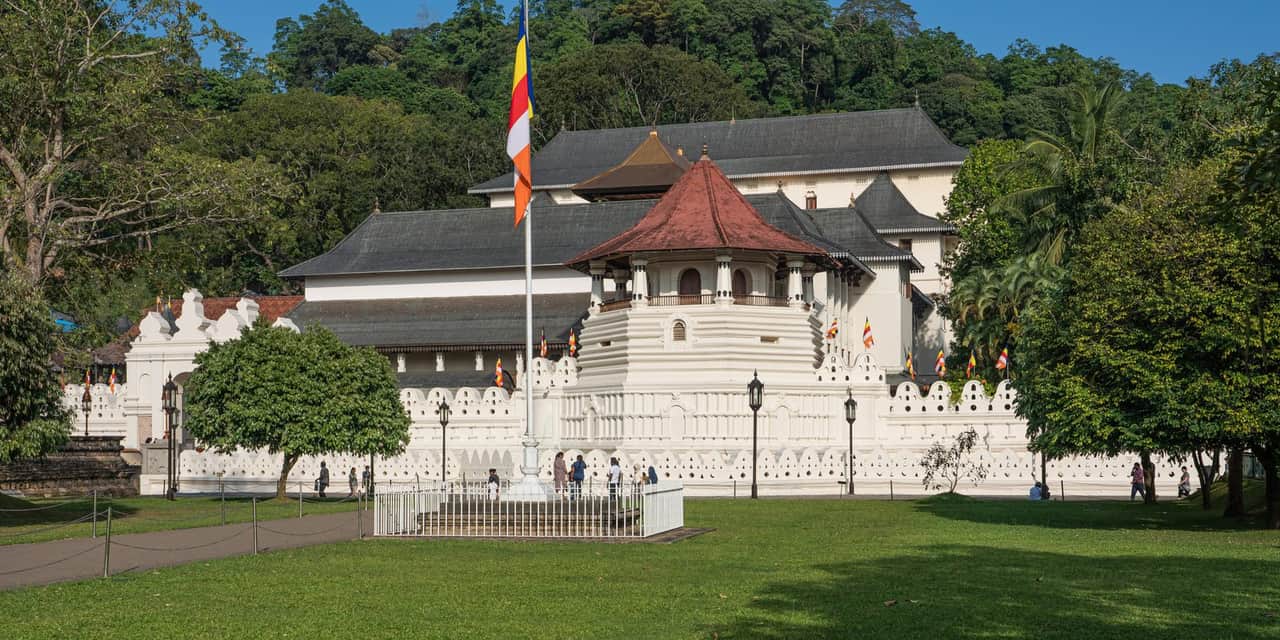
Use Booking.com as your reliable default, cross-check Agoda for price, and message small guesthouses directly for the best rate on longer stays. Each has a place:
- Booking.com has the widest inventory in Sri Lanka and the most free-cancellation rates, which makes it the safest choice for your arrival nights and for peak-season stays you don't want to leave to chance. Flexible cancellation lets you lock in a bed and change your mind later.
- Agoda is Asia-focused and often a touch cheaper for the region, so it's worth a quick price comparison on the same property before you book.
- Booking locally genuinely works for small guesthouses and homestays. Many owners list a higher price on the platforms to cover commission, so a polite WhatsApp message or a walk-in can get you a better nightly rate — especially off-peak or for a multi-night stay.
A sensible strategy: book your first night or two in advance so you arrive to a confirmed bed, reserve anything that must-not-miss in peak season, and stay flexible for the rest — Sri Lanka has plenty of rooms outside the busiest weeks.
Peak season on the south and west coasts and in the hill country runs December to March; the east coast peaks May to September. In those windows for those regions, book popular places ahead. Outside them, you can travel far more spontaneously.
Which mobile network do you recommend?
Buy a Dialog or Mobitel tourist SIM at the airport — both have the best nationwide coverage, and a tourist data pack is cheap.
- Dialog is the most popular network with travellers and has excellent, wide coverage.
- Mobitel (SLT-Mobitel) is just as good nationally and sometimes has the edge in remote hill-country and east-coast spots.
- Airtel and Hutch are cheaper but coverage is patchier once you leave the main towns — fine as a budget pick, less reliable for a touring trip.
Where and how: the Dialog and Mobitel counters are in the arrivals hall at Bandaranaike (Colombo) airport, open for late-night flights. Bring your passport, ask for a tourist data package, and you'll typically walk away with tens of gigabytes valid for your trip for just a few dollars. The staff set it up for you on the spot.
An eSIM (Airalo and similar) is convenient if your phone supports it and you'd rather not swap SIMs, but it's usually pricier per gigabyte than a local tourist SIM. For value and coverage, the airport SIM is hard to beat.
Is there a map or timetable of bus and train connections?
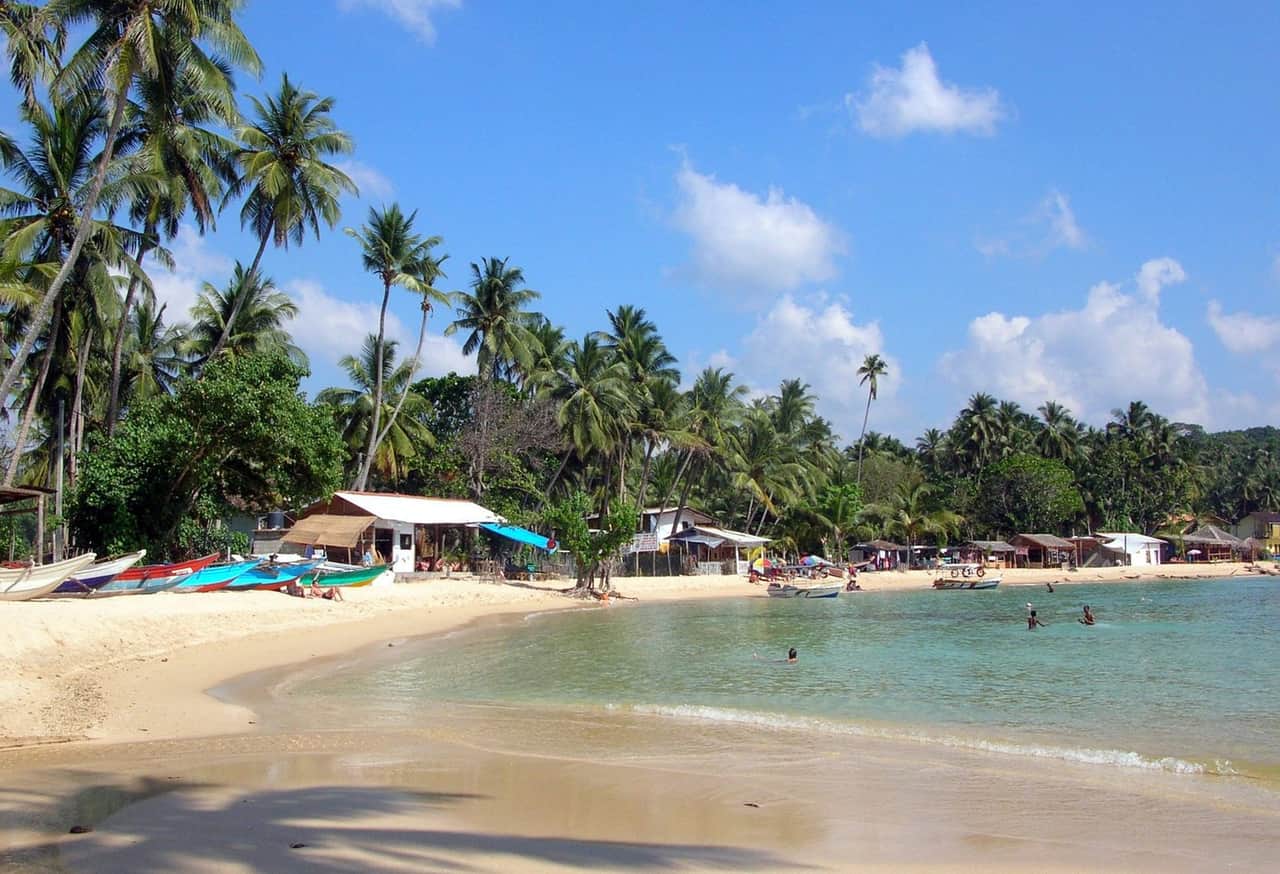
There's no single official all-in-one app, so use the right tool for each mode. Here's the honest lay of the land:
- Trains: Sri Lanka Railways publishes a timetable, and the famous scenic legs (the hill-country line through Nanu Oya and Ella especially) sell their reserved seats out well ahead. Book those online in advance — we walk through exactly how in our guide to booking Ella train tickets online. Unreserved second- and third-class carriages you can just board.
- Buses: there's no reliable published timetable, and you don't really need one. Buses (both the government SLTB and private operators) run frequently on the main routes — you turn up at the stand, ask, and one leaves soon. They're the cheapest way to travel and an experience in themselves, if slow and crowded.
- Planning tools that help: Rome2Rio and Google Maps give you a rough sense of how places connect and roughly how long legs take; 12Go lets you book some trains, buses and transfers online in advance if you'd rather have a ticket in hand. None of them is perfect for Sri Lankan buses, but they're good for orientation.
Want a driver for this trip?
Tell us your dates and route — we'll match you with a vetted private driver and send a fixed, all-inclusive quote.
Plan my tripHere's the reality most travellers land on: trains for the scenic legs, buses for cheap short hops, and a car for the slow, awkward or late-night legs where public transport eats half a day. Distances look tiny on the map but the roads are winding and slow, so a private driver for the long transfers — or, if you're solo and watching the budget, a shared cab — often makes the difference between a restful trip and an exhausting one.
If you're travelling on your own, our free share-a-taxi board matches you with other travellers on the same route so you split the fare — no booking fee, and your number stays private until you connect. Or if you'd rather just have a car and driver for the whole loop, get a quote and we'll match you with someone who knows the roads.
The short version
- Money: Wise or Revolut card for withdrawals and payments, rupee cash for everything small, a little EUR/USD as backup — and remember you can't buy rupees before you land.
- Accommodation: Booking.com to lock in arrival and peak-season nights, Agoda for a price check, direct WhatsApp for the best guesthouse rates.
- SIM: Dialog or Mobitel tourist SIM at the airport, passport in hand.
- Transport: trains (book scenic legs ahead), buses (turn up, no timetable), and a driver or shared taxi for the legs that public transport makes miserable.
Planning the wider trip? Start with our 15 things to know before visiting Sri Lanka for the seasons, visa and route basics — this FAQ handles the logistics once you've got the shape of your trip.
Frequently asked questions
Is Revolut, Wise or cash best for money in Sri Lanka?
Use a combination. A Wise or Revolut card gives you near-interbank exchange rates for ATM withdrawals and card payments, which beats exchanging cash at most counters. But Sri Lanka is a cash economy for drivers, tuk-tuks and small vendors, so carry Sri Lankan rupees too. Bring a small EUR or USD cash buffer as backup and exchange it at a bank counter, not a hotel. You cannot buy rupees before you arrive — the currency is restricted.
Should I book accommodation on Booking.com, Agoda, or find it locally?
Booking.com has the widest inventory in Sri Lanka and reliable free-cancellation rates, so it's the safest default for your arrival nights and peak-season stays. Agoda is Asia-focused and often a little cheaper, so it's worth cross-checking. For small guesthouses and homestays you can frequently get a better price by messaging the owner directly on WhatsApp or turning up in person, since that saves them the platform commission. Book ahead in peak season; stay flexible off-peak.
Which mobile network is best in Sri Lanka for tourists?
Dialog and Mobitel (SLT-Mobitel) have the best nationwide coverage and both sell cheap tourist data SIMs at Colombo airport arrivals. Dialog is the most popular with travellers; Mobitel sometimes has the edge in remote hill-country and east-coast areas. Airtel and Hutch are cheaper but patchier. Buy a tourist SIM at the airport with your passport — you get tens of gigabytes for a few dollars.
Is there a map or timetable of bus and train connections in Sri Lanka?
There's no single official all-in-one app. For trains, use the Sri Lanka Railways timetable and book reserved scenic legs online in advance. For buses there's no reliable timetable — they run frequently, so you just turn up. Planning tools like Rome2Rio, Google Maps and 12Go help you see rough connections and book some trains and buses ahead, but for slow or awkward legs most travellers use a private driver or a shared taxi.
Do I need cash in Sri Lanka or are cards enough?
Carry cash. Cards work at bigger hotels and city restaurants, but drivers, tuk-tuks, roadside food, entry fees and most small guesthouses are cash only. Withdraw rupees from ATMs in towns and keep smaller notes handy.