
Mirissa with a private driver
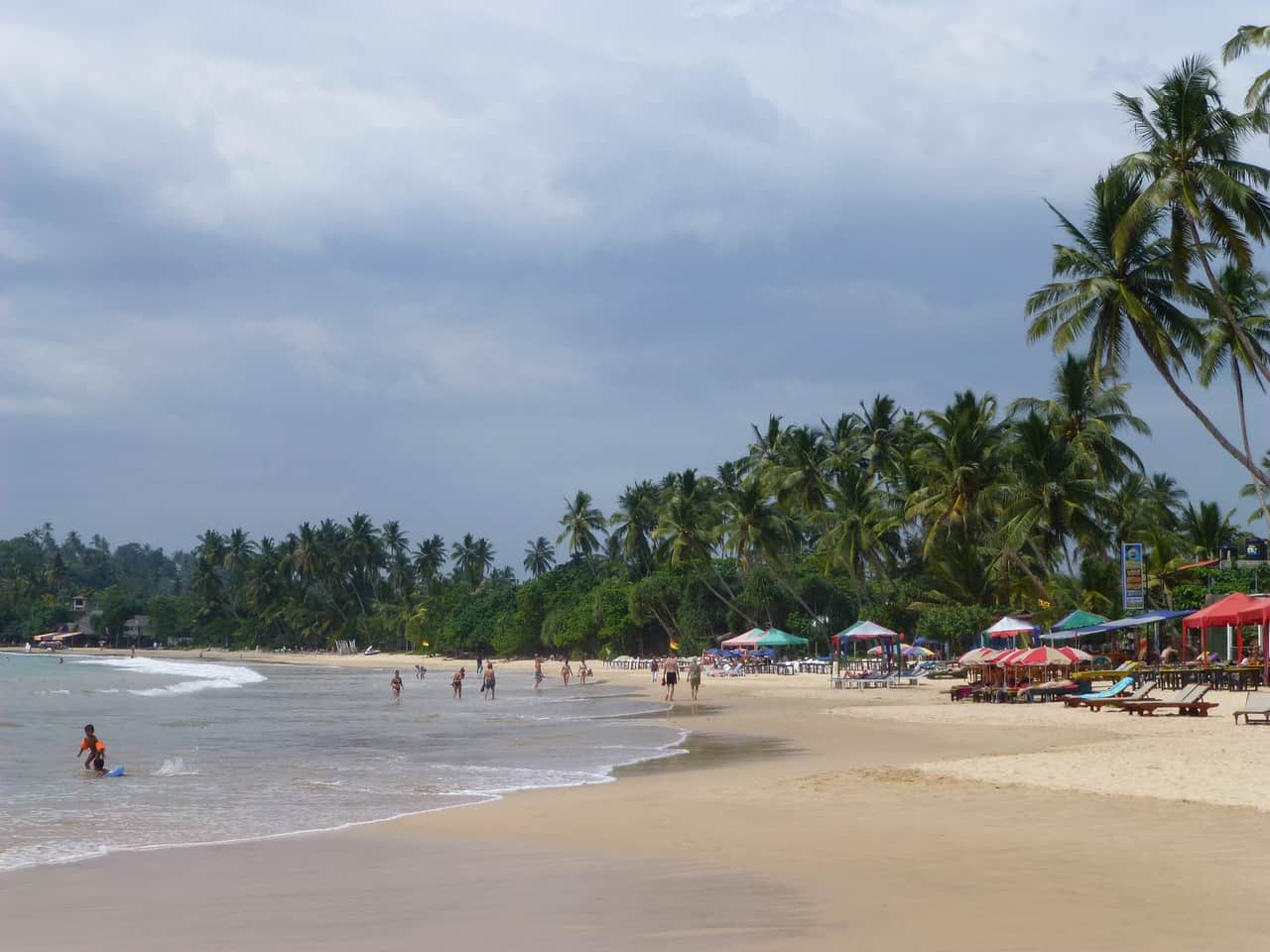
Mirissa is a crescent-shaped bay on the south coast framed by coconut palms, with a whale-watching industry that operates on the Indian Ocean's most productive feeding grounds. Between November and April, blue whales — the largest animals on earth — and sperm whales feed in the deep water just a few miles offshore, and Mirissa is one of only a handful of places in the world where reliable blue whale sightings are possible from a small boat on a morning trip. Spinner dolphins are present year-round and often ride the bow wave of the whale-watching boats on the way out. Beyond the whales, Mirissa has the relaxed quality of a beach town that was discovered relatively recently and has not yet been fully absorbed into the package-tourism infrastructure — the main beach retains its palm grove, the restaurants and bars on the sand are mostly family-run, and Coconut Tree Hill at the western end of the bay gives a quiet alternative to the main strip. It connects easily with Galle Fort (40 minutes west) and Weligama surf beach (15 minutes east). A private driver is essential for the whale-watching departure: boats leave at 6am or 6:30am, and the logistics of getting from a hotel in Galle or further afield to Mirissa harbour in time require your own vehicle.
What your driver shows you in Mirissa
- Blue and sperm whale watching, November to April
- Coconut Tree Hill and Secret Beach at the bay's west end
- Weligama surf lessons, 15 minutes east
- Parrot Rock sunset above the main beach
- Fresh catch seafood restaurants directly on the sand
Whale watching in Mirissa — what to expect
Whale-watching boats depart Mirissa harbour at around 6am or 6:30am and return by noon. Blue whales are the headline species from November to April when the south-west monsoon is absent and sea conditions are calm — sighting rates in this window are high, typically above 80% on good-weather days. Sperm whales are present year-round in the deep offshore water, and spinner dolphin pods often number in the hundreds. Bryde's whales and occasional fin whales are also recorded. The boats used are fibreglass launches with covered canopy sections and open bow seating — bring sunscreen, a hat and a sea-sickness remedy if you are susceptible to motion. A responsible operator will maintain the minimum approach distances required by Sri Lanka's cetacean-watching guidelines and will not circle or pursue animals. The trip covers 20 to 40km of open ocean depending on where the whales are located that day, so a full four hours on the water is typical. Your private driver handles the early departure logistics and picks you up from the harbour when you return.
Best time to visit Mirissa
November through April is the main season for Mirissa and the south coast: whale watching is active, the sea is calm for swimming, and the beach bars are in full swing. The peak weeks around Christmas and New Year are the most crowded and expensive. May through October is the south-west monsoon — whale watching is suspended, the sea can be rough, and some beach facilities close. However, Mirissa out of season has its own appeal: it is quieter, prices are lower, and the town itself — the coconut grove, the Parrot Rock path, the village streets inland — is enjoyable regardless of the sea conditions. The surf season at Weligama (15 minutes east) coincides almost exactly with the monsoon, so surfers often visit in May through October when beach-holiday visitors are absent. Coconut Tree Hill is pleasant at any time of year for the elevated view over the bay.
How to get to Mirissa
The simplest way to reach Mirissa is with a private driver: you're met at Colombo Airport (CMB) with a name board and driven door to door, with no timetables, bus changes or luggage hassle. Because the daily rate is charged per vehicle rather than per person, it's also the best value for couples, families and small groups.
Mirissa FAQs
When is the best time for whale watching in Mirissa?
November to April is the main season, with the calmest seas and the highest blue whale sighting rates. January, February and March are typically the best months, with flat seas and very regular sightings. The season effectively ends in May when the south-west monsoon brings rough conditions.
What time do whale watching boats leave from Mirissa?
Most operators depart at 6am or 6:30am to reach the deep-water feeding grounds in the best morning light. Trips return to harbour by noon. Your private driver gets you to Mirissa harbour on time regardless of where you are staying the night before.
What types of whales can I see in Mirissa?
Blue whales are the main attraction from November to April — Mirissa is one of the best blue whale destinations in the world. Sperm whales are present year-round. Spinner dolphins, Bryde's whales and occasional fin whales and humpbacks are also recorded. Sighting rates for at least one species are high in the main season.
Is Mirissa or Hikkaduwa better for beaches?
They serve different preferences. Mirissa has a more relaxed, less developed bay with better swimming conditions and is close to whale watching. Hikkaduwa has a longer beach, a coral reef suitable for snorkelling close to shore, and more of a beach-resort infrastructure with a longer tourist history. Galle Fort is between the two and easy to combine with either.
Can I swim at Mirissa beach?
Yes, in the dry season (November to April). The main beach has calm conditions suitable for swimming, with gentle waves. The far west end of the bay near Coconut Tree Hill and Secret Beach can be calmer. During the south-west monsoon (May–October) the sea is rough and swimming is not advised.
Useful resources for visiting Mirissa
Nearby places
3 places nearby, nearest first.
Related reading
See Mirissa at your own pace
One trusted driver, transparent daily rate, and a route you can change any time. Free airport pickup on longer tours.
Plan my tripNo payment now · Free cancellation up to 7 days